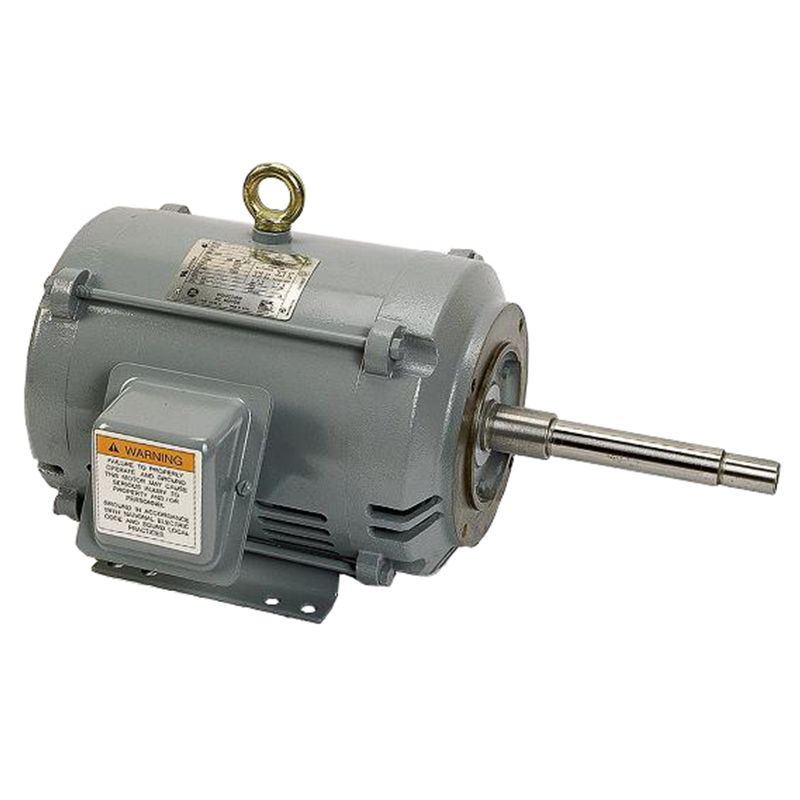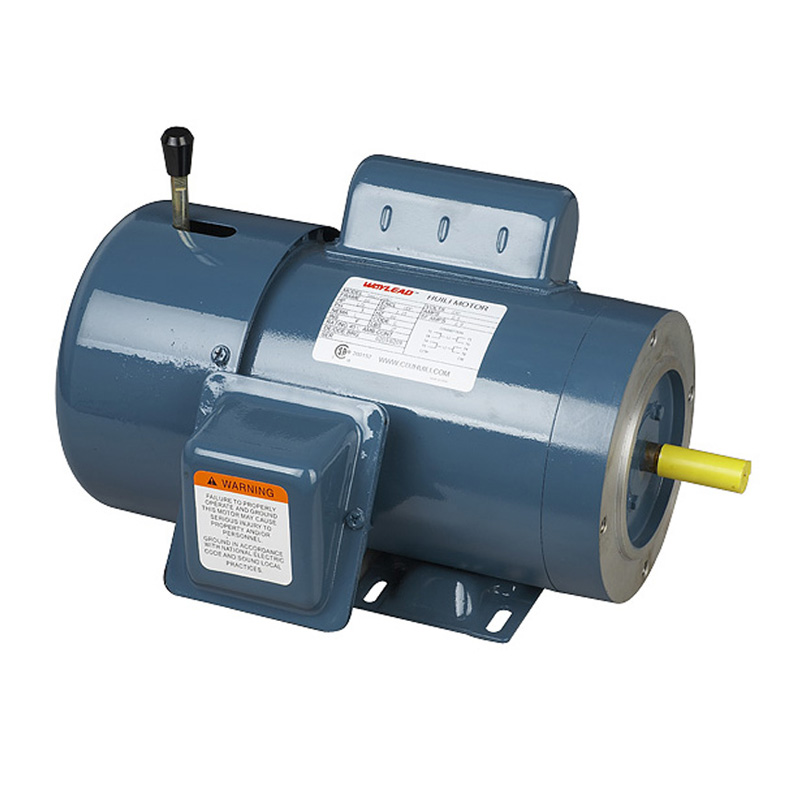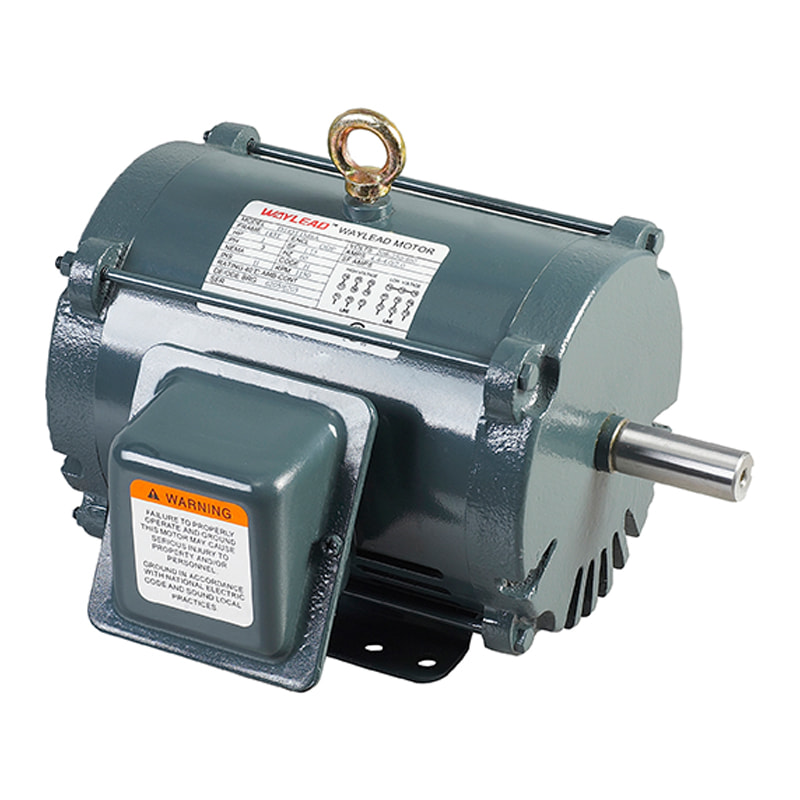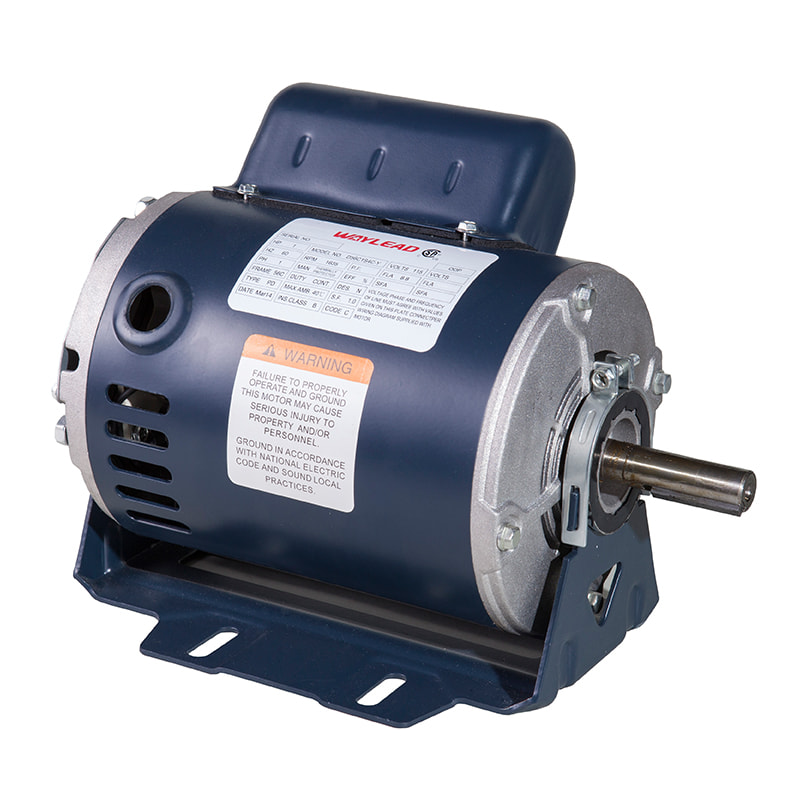
Um motor síncrono é um motor elétrico CUm que gira a uma velocidade exatamente sincronizada com a frequência da corrente de alimentação – o que significa que seu rotor gira na mesma velocidade que o campo magnético giratório do estator. Umo contrário dos motores de indução, ele opera a uma velocidade velocidade constante independentemente da carga (dentro dos seus limites de torque), torneo-o ideal para aplicações industriais de precisão.
O motor síncrono pertence à família dos motores CA duplamente excitados. É fornecido com corrente alternada nos enrolamentos do estator, o que cria um campo magnético rotativo. O rotor - excitado por uma fonte CC - trava neste campo rotativo e gira exatamente na mesma velocidade. velocidade síncrona (Ns), definido por:
Onde f é a frequência de alimentação (Hz) e P é o número de pólos. Para um motor de 4 pólos com alimentação de 60 Hz, isso dá Ns = 1800 RPM – uma velocidade fixa e inabalável.
Esta característica é fundamentalmente diferente de uma indução motor , que sempre opera abaixo da velocidade síncrona (chamada de “escorregamento”). Em um motor síncrono, há escorregamento zero sob operação em estado estacionário.
A compreensão do princípio de funcionamento requer o exame de dois fenômenos principais: a criação do campo magnético rotativo e o mecanismo de travamento do rotor.
Queo CA trifásica é aplicada aos enrolamentos do estator, produz-se um campo magnético rotativo (RMF) que gira ao redor do estator em velocidade síncrona. A velocidade e a direção do RMF dependem inteiramente da frequência de alimentação e da configuração do enrolamento.
O rotor poles are energized by a Fonte de excitação DC (escovas e anéis coletores ou um excitador sem escova). Isto cria um campo magnético fixo no rotor, dando-lhe pólos Norte e Sul distintos.
O stator's rotating field "pulls" the rotor poles along with it through magnetic attraction. Once the rotor achieves synchronous speed, the North pole of the rotor locks with the South pole of the rotating stator field. This is called travamento magnético ou "atrair". A partir deste ponto, o rotor gira exatamente na velocidade síncrona.
A motor síncrono is not self-starting . Parado, a inércia do rotor impede que ele siga o campo de rotação rápida do estator. Os métodos iniciais comuns incluem:
Motores síncronos são classificados com base na construção do rotor, método de excitação e tamanho:
O classical design. The rotor has wound coils fed by DC through slip rings. Offers precise control of excitation current, making it ideal for correção do fator de potência . Comum em grandes acionamentos industriais (compressores, moinhos, bombas).
Usa ímãs permanentes no rotor em vez de bobinas enroladas. Elimina a necessidade de excitação DC e anéis coletores. Oferece alta eficiência, alta densidade de potência e tamanho compacto. Amplamente utilizado em veículos elétricos, servoacionamentos, compressores HVAC e robótica.
Possui rotor de pólo saliente sem enrolamentos ou ímãs. O torque é produzido puramente pela variação da relutância magnética. Simples, robusto e de baixa manutenção, embora geralmente com menor densidade de torque.
Usa as propriedades de histerese de um material de rotor especial. Notável pela operação suave e silenciosa e capacidade inerente de partida automática. Comum em dispositivos de cronometragem, relógios e instrumentos de precisão .
O most common comparison in the industry is between motor síncronos and indução motors (asynchronous motors) . Aqui está uma análise detalhada:
| Recurso | Motor Síncrono | Motor de indução |
| Velocidade | Exatamente síncrono (constante) | Um pouco abaixo do síncrono (deslizamento) |
| Deslizamento | Deslizamento zero | 2–8% de escorregamento em plena carga |
| Excitação | Requer excitação DC (ou PM) | Nenhuma excitação separada necessária |
| Fator de Potência | Controlável (unidade ou liderança) | Umlways lagging (0.7–0.9 typical) |
| Autoinicialização | Não é autoinicializado (requer ajuda) | Inicialização automática |
| Eficiência | Superior (especialmente PMSM) | Moderado |
| Custo | Custo inicial mais alto | Menor custo inicial |
| Manutenção | Superior (escovas/anéis coletores no tipo de ferida) | Inferior (robusto, simples) |
| Velocidade Control | Via VFD (mudança de frequência) | Via VFD ou mudança de pólo |
| Melhor para | Velocidade de precisão, correção de PF, alta potência | Acionamentos industriais em geral |
O unique properties of motor síncronos fazem deles a escolha preferida em uma ampla gama de aplicações exigentes:
| Umpplication Sector | Uso Específico | Tipo de motor preferido |
| Petróleo e Gás | Compressores, bombas de tubulação | Campo de ferida, quadro grande |
| Siderurgia e Mineração | Laminadores, moinhos de bolas, trituradores | Campo de ferida, alto torque |
| Veículos Elétricos | Unidades de tração, eixos eletrônicos | PMSM (ímã permanente) |
| HVAC e refrigeração | Compressores scroll e centrífugos | PMSM, relutância |
| Robótica e CNC | Servo eixos, posicionamento de precisão | Servomotores PMSM |
| Utilidades Elétricas | Condensadores síncronos (correção de PF) | Campo de ferida, sem carga |
| Têxtil e Papel | Linhas de processamento de velocidade crítica | Campo de feridas ou PMSM |
| Eletrônicos de consumo | Relógios, temporizadores, toca-discos | Histerese, PM pequeno |
Para engenheiros que selecionam um motor síncrono , a escolha entre os tipos de ímã permanente e de campo enrolado é crítica:
Como a velocidade síncrona é diretamente governada pela frequência de alimentação, controle de velocidade de um motor síncrono é conseguido alterando a frequência da alimentação CA. Isso é feito através de:
Moderno motor síncronos , particularmente PMSMs, estão liderando a adoção das classes de eficiência IEC 60034-30 IE4 (Super Premium) and IE5 (Ultra Premium) . Em contraste, a maioria dos motores de indução tipo gaiola de esquilo atingem o máximo em IE3.
Para um motor de 37 kW operando 6.000 horas/ano, a diferença de eficiência entre IE3 (indução) e IE5 (síncrono) pode economizar centenas de quilowatts-hora anualmente – traduzindo-se em economias significativas de custos e carbono ao longo dos 15 a 20 anos de vida útil de um motor.
Quando a CA é aplicada pela primeira vez, o estator cria um campo rotativo que gira imediatamente em velocidade síncrona. O rotor estacionário, devido à inércia, não pode seguir instantaneamente. O campo inverte a direção antes do rotor se mover, resultando em torque inicial médio zero. Auxiliares de partida (enrolamentos amortecedores, VFD, motor pônei) são necessários para levar o rotor primeiro à velocidade quase síncrona.
Mecanicamente, são máquinas idênticas. Quando a energia mecânica é aplicada para girar o eixo, ele funciona como um gerador (alternador). Quando a energia elétrica entra no estator, ele funciona como um motor. A distinção é puramente sobre a direção da conversão de energia.
Um condensador síncrono é um motor síncrono funcionando sem carga mecânica (sem carga no eixo conectado). Ao ajustar sua excitação CC, ele absorve ou gera potência reativa (VAR), agindo como um grande capacitor variável. As concessionárias o utilizam extensivamente para correção do fator de potência and voltage regulation na grade.
Sim. Muitos motores síncronos de campo enrolado grandes são iniciados através de enrolamentos amortecedores e funcionam diretamente on-line em velocidade fixa. No entanto, um VFD é necessário para operação com velocidade variável e é o método de partida moderno preferido para os tipos PMSM.
Se o torque da carga mecânica exceder o torque do motor torque de extração (torque síncrono máximo), o rotor perde o bloqueio magnético com o campo giratório do estator e desacelera. Isso é chamado de “perda de sincronismo” ou “retirada”. O motor deve ser parado, a sobrecarga removida e reiniciado. A sobreexcitação aumenta o torque de extração, melhorando as margens de estabilidade.
Esta é a característica única e poderosa dos motores síncronos de campo enrolado:
— Excitação normal: Fator de potência unitário (o motor consome apenas potência ativa)
— Excesso de excitação: Fator de potência principal (o motor gera potência reativa, ajudando outras cargas atrasadas)
— Subexcitação: Fator de potência atrasado (o motor absorve potência reativa)
Ambos são ímã permanente motor síncronos , mas eles diferem no formato do back-EMF. O PMSM possui um back-EMF senoidal e é acionado por correntes senoidais (via FOC), resultando em uma saída de torque suave. BLDC (Brushless DC) possui um back-EMF trapezoidal e usa comutação retangular, mais simples, mas com maior ondulação de torque. PMSM é preferido para aplicações de servo de precisão.
O motor síncrono se destaca como uma das máquinas mais sofisticadas e versáteis da engenharia elétrica. Sua característica definidora — operar exatamente velocidade síncrona — oferece benefícios que os motores de indução simplesmente não conseguem igualar: escorregamento zero, fator de potência controlável e eficiência superior em ciclos de trabalho elevados.
Para aplicações industriais de alta potência (compressores, moinhos, bombas) onde tanto a precisão da velocidade quanto a correção do fator de potência são importantes, o motor síncrono de campo enrolado permanece incomparável. Para drives compactos e de alta eficiência (EVs, servosistemas, HVAC), o motor síncrono de ímã permanente (PMSM) lidera o caminho, levando a eficiência aos níveis IE5 que representam o futuro da tecnologia de motores elétricos.
À medida que os padrões globais de eficiência energética se tornam mais rigorosos e os custos dos acionamentos de velocidade variável continuam a cair, motor síncronos — particularmente os tipos PMSM — estão expandindo rapidamente sua participação no mercado de motores industriais, substituindo os motores de indução convencionais em uma gama cada vez maior de aplicações.
Copyright © 2018 Cixi Wayad Motor Manufacturing Co., Ltd.Todos os direitos reservados.
 Conecte-se
Fabricantes de motor AC atacado
Conecte-se
Fabricantes de motor AC atacado