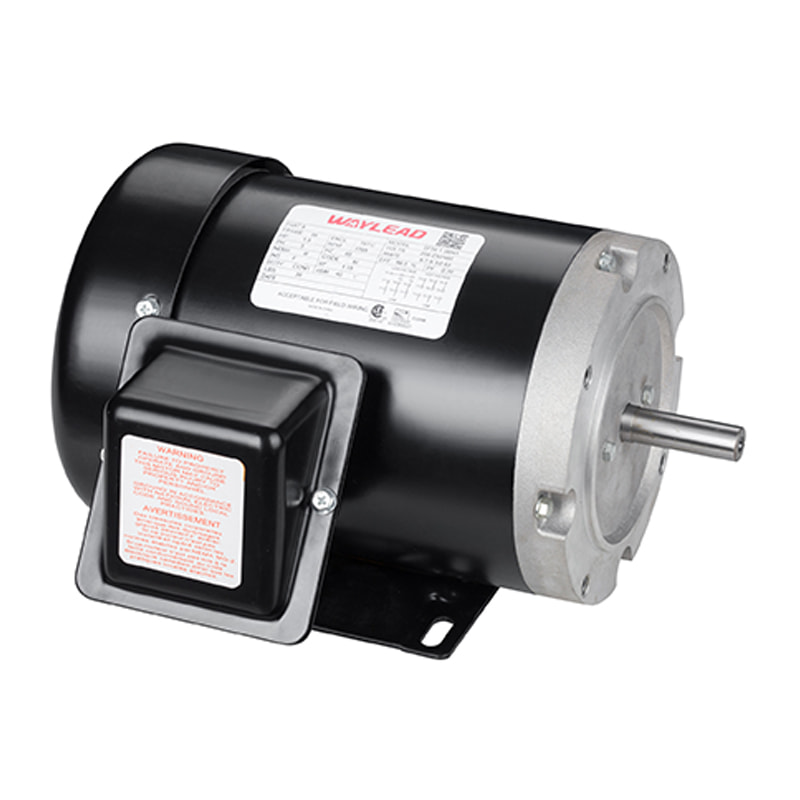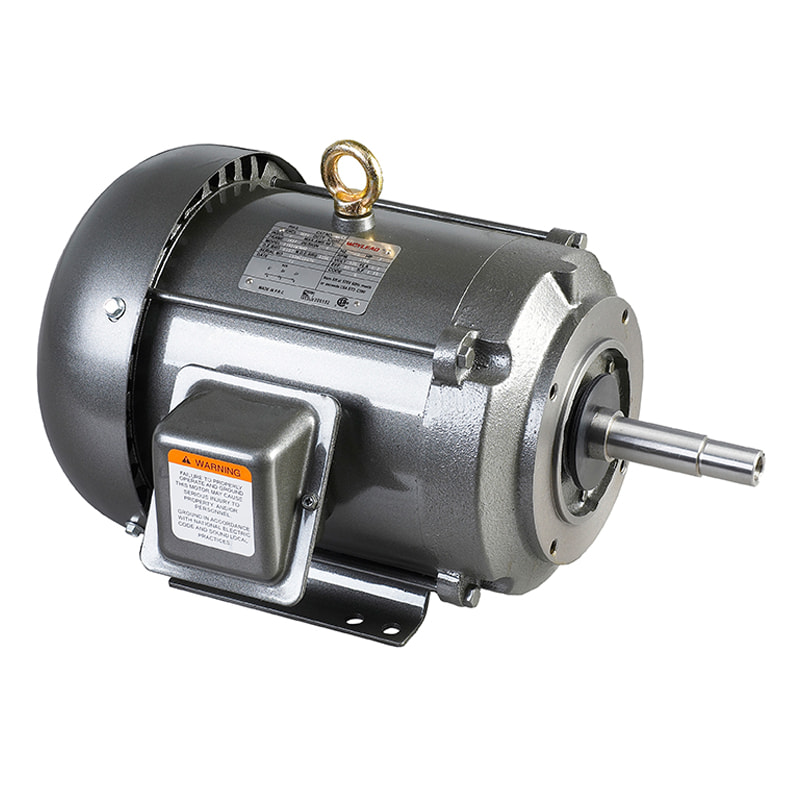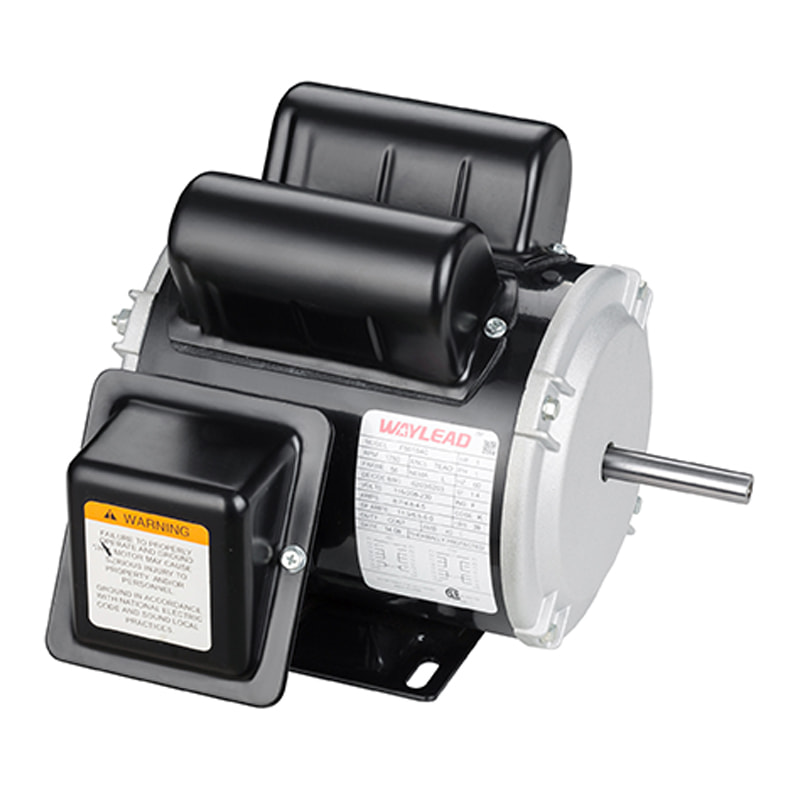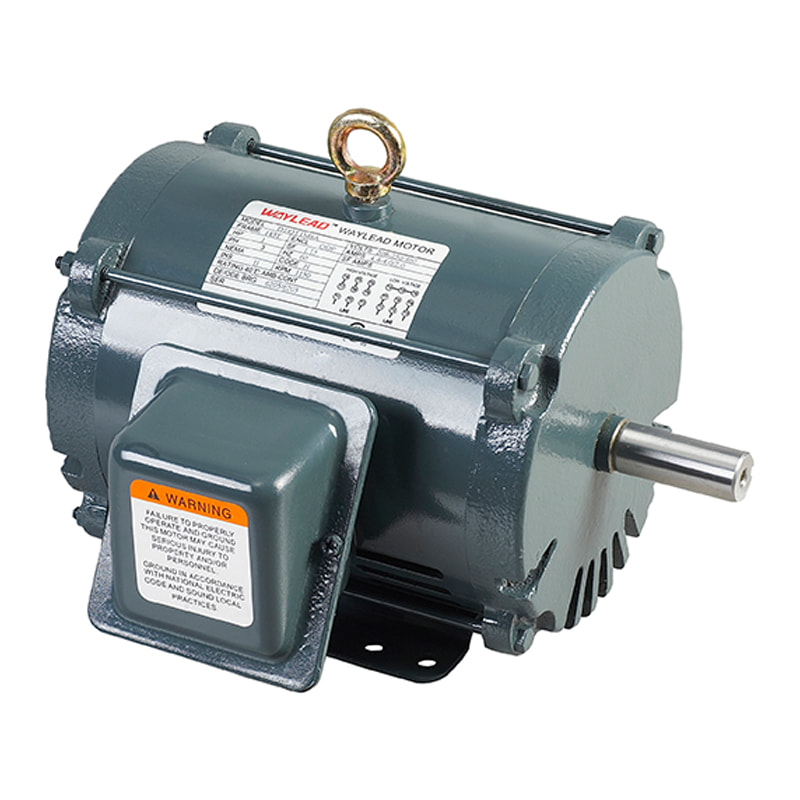
Motor service factor (SF) is a multiplier on a motor's nameplate horsepower rating that indicates how much overload the motor can handle continuously without damage under specific conditions. For example, a 10 HP motor with a service factor of 1.25 can safely operate at 12.5 HP when needed. Understanding motor service factor is essential for selecting the right motor, avoiding premature failure, and optimizing energy efficiency in industrial and commercial applications.
What Is Motor Service Factor?
Service factor is a dimensionless number printed on every NEMA-standard motor nameplate that defines the permissible overload capacity above the rated horsepower. The National Electrical Manufacturers Association (NEMA) defines service factor as the ratio of the maximum allowable continuous load to the nameplate-rated load under the standard operating conditions of rated voltage and frequency. It is not a safety factor in the traditional sense—it is a designed operational reserve that can be used when process demands briefly exceed normal levels.
Common service factor values for general-purpose AC induction motors include 1.0, 1.15, and 1.25. A service factor of 1.0 means the motor should never exceed its nameplate rating. A value of 1.15 is the most frequently encountered for standard open drip-proof (ODP) motors, while 1.25 is often found on motors designed for particularly demanding duty cycles.
How Motor Service Factor Is Calculated
The usable horsepower at service factor is simply the nameplate HP multiplied by the SF value. The formula is straightforward:
Service Factor HP = Nameplate HP × Service Factor
Example: 20 HP × 1.15 SF = 23 HP maximum continuous load
However, operating at service factor load comes with trade-offs. When a motor runs at its SF load rather than its rated load, temperature rise increases significantly—typically by 10–25°C above the standard 40°C ambient baseline—winding insulation life is shortened, and efficiency drops. Manufacturers design motors to accommodate this temporary overload, but sustained operation at SF load is not recommended as standard practice.
Common Service Factor Values by Motor Type
Different motor designs and enclosure types carry different standard service factors based on their thermal management capability. The table below summarizes typical values across common motor categories:
| Motor Type | Enclosure | Typical SF | Typical Application |
|---|---|---|---|
| General Purpose AC Induction | ODP | 1.15 | Pumps, fans, conveyors |
| General Purpose AC Induction | TEFC | 1.0–1.15 | Outdoor, washdown environments |
| Premium Efficiency (IE3/NEMA Premium) | ODP / TEFC | 1.15 | Energy-conscious facilities |
| Single-Phase Motors (<1 HP) | Various | 1.25–1.35 | Small appliances, HVAC |
| Inverter-Duty / VFD Motors | TEFC | 1.0 | Variable speed drives |
| Explosion-Proof Motors | TEXP | 1.0 | Hazardous locations |
Motor Service Factor vs. Safety Factor: Key Differences
Service factor and safety factor are frequently confused, but they serve entirely different engineering purposes. Understanding the distinction is critical for correct motor sizing.
- Service Factor (SF) — A manufacturer-defined operational parameter on the nameplate. It describes a usable overload range that the motor is specifically designed and tested to handle. Using the SF load is permitted under NEMA standards at standard voltage and frequency conditions.
- Safety Factor — An engineering design margin applied to structural or mechanical components to account for uncertainties, material variability, and unexpected loads. It is not printed on a motor nameplate and should not be confused with SF.
A common mistake is purchasing a smaller motor and relying on the SF to handle the normal operating load. This misuse shortens motor life dramatically. The SF is best thought of as an emergency reserve, not a routine operating zone. The Department of Energy recommends sizing motors so that they operate between 75% and 100% of nameplate HP under normal conditions.
How Service Factor Affects Motor Temperature and Lifespan
Operating a motor at its service factor load significantly increases winding temperature, directly reducing insulation life according to the Arrhenius Rule of 8°C. This rule states that for every 10°C rise in winding temperature above the insulation's rated class limit, motor insulation life is cut in half.
| Insulation Class | Max Temperature Rise (at rated load) | Max Temperature Rise (at SF load) | Life Impact at SF Load |
|---|---|---|---|
| Class B | 80°C | 90°C | ~50% reduction |
| Class F | 105°C | 115°C | ~50% reduction |
| Class H | 125°C | 135°C | ~50% reduction |
Most modern motors use Class F insulation but are tested to Class B temperature limits at rated load—meaning there is a built-in thermal reserve even before the SF is engaged. This design practice gives motors with a 1.15 SF more robust thermal headroom in practice.
When and How to Use Motor Service Factor Correctly
Service factor should be used as a temporary operational buffer for short-duration peak loads, not as a routine operating point. Appropriate scenarios for leveraging SF include:
- Startup surges — Motors driving high-inertia loads like large fans or centrifuges can briefly draw above-rated current during acceleration.
- Seasonal peaks — HVAC compressor motors may temporarily experience higher-than-design loads during extreme weather.
- Process upsets — A pump motor encountering unexpected system head or a conveyor motor hitting a temporary jam can use SF headroom to prevent nuisance tripping.
- Altitude and ambient corrections — At elevations above 3,300 feet (1,000 m) or ambient temperatures above 40°C, NEMA requires SF to be derated. Consult manufacturer curves for specific derating tables.
Service Factor and VFDs: A Critical Warning
When a motor is controlled by a variable frequency drive (VFD), the nameplate service factor is effectively voided and the motor must be treated as SF = 1.0. VFDs introduce harmonic distortion and additional losses that increase winding temperature independently. Running a VFD-controlled motor above its nameplate HP—even within the labeled SF—can result in rapid insulation failure. Always use inverter-rated motors with SF 1.0 in VFD applications.
Motor Service Factor vs. Motor Sizing: Which Should You Use?
Proper motor sizing always prioritizes matching the motor's nameplate HP to the actual load—never rely on SF to compensate for an undersized motor selection.
| Scenario | Approach | Recommended? | Reason |
|---|---|---|---|
| Load = 11 HP, motor = 10 HP (SF 1.15) | Rely on SF for normal operation | Not Recommended | Constant SF operation shortens insulation life |
| Load = 11 HP, motor = 15 HP (SF 1.15) | Motor runs at 73% load; SF is reserve | Correct | Motor runs cool, SF available for peaks |
| Occasional 10-minute peak spikes to SF load | Use SF load temporarily, cool between cycles | Acceptable | This is the intended purpose of SF |
| VFD-controlled motor at SF load | Ignore SF; treat as SF 1.0 | Dangerous | VFD harmonics add extra thermal stress |
How to Read Motor Service Factor on the Nameplate
The service factor appears as "S.F." or "S/F" on the motor nameplate alongside HP, RPM, voltage, full-load amps (FLA), insulation class, and frame size. Here is what a typical nameplate entry looks like and how each value relates to SF:
- HP: 25 — Rated horsepower output
- S.F.: 1.15 — Motor can sustain 28.75 HP under SF conditions
- FLA: 30 A — Full-load amperes at rated HP and voltage
- S.F. Amps: 34.5 A — Current draw at the SF load (some nameplates list this separately)
- Ins. Class: F — Maximum temperature class of the winding insulation
When setting overload relay protection, always base the trip setting on the FLA, not the SF amps. The NEC (National Electrical Code) Article 430 specifies that motor overload protection must be set at no more than 125% of FLA for motors with SF ≥ 1.15, and 115% of FLA for motors with SF < 1.15.
Service Factor and Motor Energy Efficiency
Operating a motor at its SF load reduces efficiency by 2–5 percentage points compared to operating at rated load, directly increasing energy costs. For example, a 50 HP motor running 8,760 hours per year at $0.12/kWh:
- At rated load (93% efficiency): Annual energy cost ≈ $26,800
- At SF load (90% efficiency): Annual energy cost ≈ $30,600
- Difference: $3,800 per year in additional energy expense per motor
This is why facilities with dozens of motors operating routinely above nameplate HP can see tens of thousands of dollars in avoidable annual energy costs. Proper motor sizing to keep machines at 75–100% of nameplate load consistently outperforms the short-term cost savings of selecting a smaller, cheaper motor.
Frequently Asked Questions About Motor Service Factor
Q: Can I continuously run my motor at its service factor load?
Technically yes, NEMA permits it under standard voltage and ambient conditions—but it is not advisable for routine operation. Sustained SF-load operation accelerates insulation aging, reduces motor lifespan, and decreases efficiency. Use SF as an occasional overload buffer, not a daily operating point.
Q: What service factor do I need for a heavy-duty application?
For genuinely demanding applications—such as crushers, reciprocating compressors, or frequent start-stop cycles—the better engineering solution is to select a larger nameplate HP motor (not a higher SF motor) and to confirm the motor's duty cycle rating matches the application. A 1.15 SF motor properly sized is preferable to a 1.25 SF undersized motor.
Q: Does higher service factor mean better quality?
Not necessarily. A higher SF simply means the motor has more overload thermal headroom built in by the manufacturer. Premium efficiency motors often achieve a 1.15 SF while maintaining superior efficiency at rated load. The best motor for most applications is one that runs at 75–100% of rated HP with an SF that provides adequate emergency reserve.
Q: What happens to service factor at high altitude?
At altitudes above 3,300 feet (1,000 m), air density decreases, reducing convective cooling efficiency. NEMA MG 1 requires that motors operated above this altitude must have their SF derated. As a rough rule, for every 330 feet (100 m) above 3,300 feet, apply approximately 1% derating to the SF. At 6,600 feet (2,000 m), a 1.15 SF motor would effectively become a 1.12 SF motor.
Q: Is motor service factor the same for IEC motors?
No. IEC (International Electrotechnical Commission) standards, used widely outside North America, do not use the same service factor system. IEC motors are rated for a specific continuous duty (designated as S1–S9) and do not carry a multiplier overload factor on the nameplate. When comparing NEMA and IEC motors, engineers must carefully review the duty class, insulation rating, and thermal limits rather than simply looking for an SF number.
Q: How do I set overload protection for a motor with SF 1.15?
Per NEC Article 430.32, for a motor with a service factor of 1.15 or greater, overload protection must be set at no more than 125% of the motor's full-load current (FLA). For a motor with SF less than 1.15, the limit is 115% of FLA. Always set protection based on nameplate FLA, not the SF ampere rating.
Conclusion
Motor service factor is one of the most important—and most misunderstood—parameters on a motor nameplate. It defines the overload capacity a motor can temporarily sustain, not a routine operating band. Selecting the right motor means sizing it so that normal operation falls at 75–100% of nameplate HP, with the SF available as a genuine reserve for peak or transient demands. Misusing SF as a cost-cutting motor selection strategy leads to higher energy bills, shortened motor life, and unplanned downtime.
Whether you're specifying a new motor, troubleshooting premature failures, or reviewing your facility's energy costs, understanding motor service factor gives you the technical foundation to make better decisions and protect your equipment investment.